
The Hawthorne Effect
The Productivity Secret Discovered by Accident in 1920s Chicago

In the late 1920s, researchers began studying productivity at a large factory in Chicago called Hawthorne Works. Their goal was to understand what conditions helped workers perform better and increase productivity.
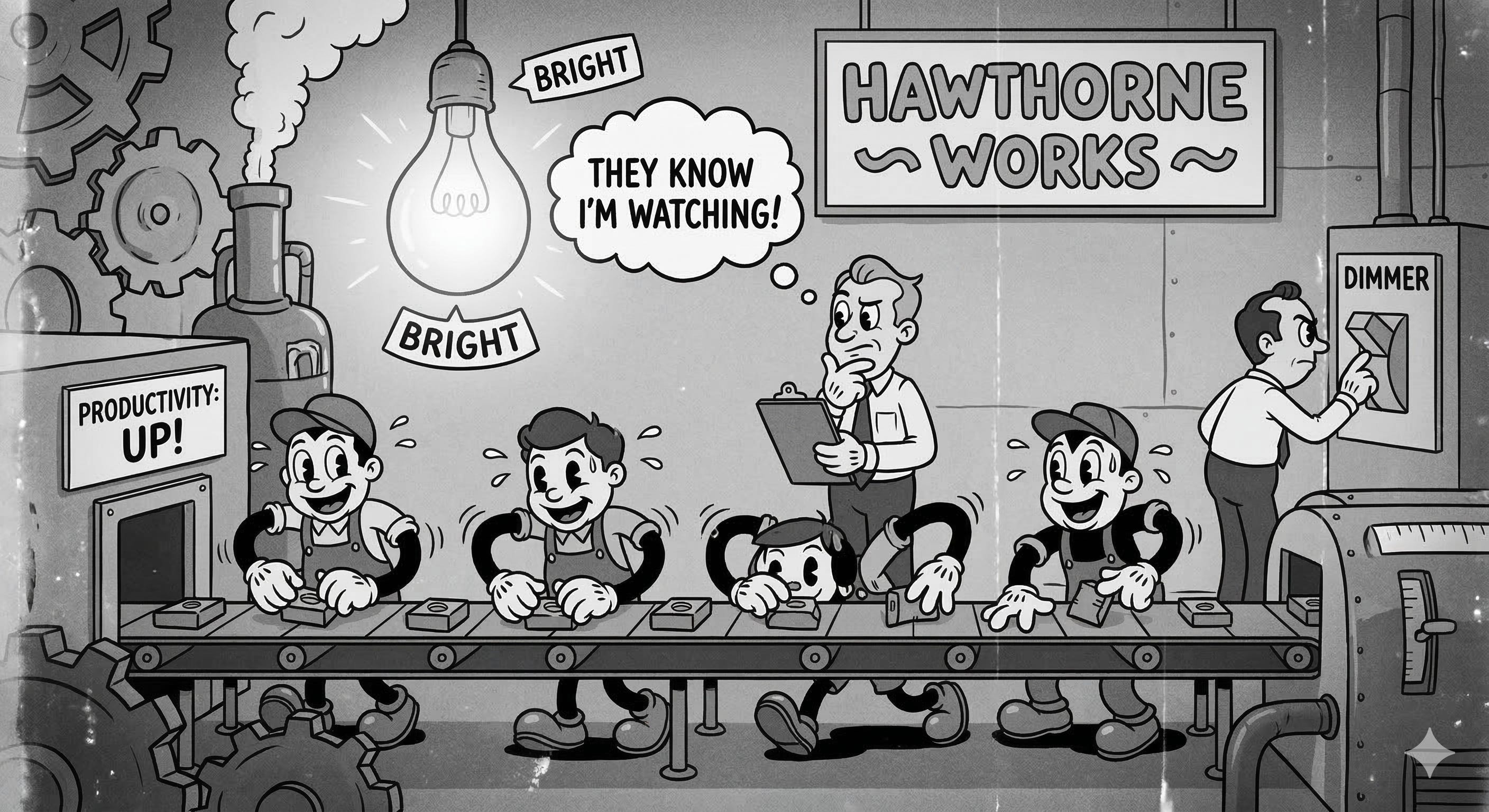
One of the first things they tested was lighting. The logic seemed obvious: brighter light should make work easier, and easier work should increase productivity.
And at first, that is exactly what happened. When they increased the lighting, productivity improved.
But then something strange occurred. Someone, perhaps by mistake, lowered the lighting again. Yet the assembly lines sped up once more.
Lower lighting should have made the work harder, not easier. Instead, productivity kept rising.
So the researchers continued experimenting.
They changed break schedules. They adjusted working hours. They modified workplace conditions.
And productivity continued to improve.
Eventually they realized something surprising. It didn’t matter what they changed. What mattered was that the workers knew they were being observed.
This insight later became known as the Hawthorne Effect.
People often change their behavior simply because they know someone is paying attention.
The idea shows up everywhere.
A person who starts tracking their daily steps suddenly walks more. A team that begins measuring performance often improves its numbers, at least for a while.
The improvement usually doesn’t come from the system itself. It comes from the attention surrounding it.
Back in that Chicago factory, it wasn’t really the wattage of the light bulbs that mattered. What mattered was that someone cared enough to adjust them.
In our own work, the “lighting” is often secondary. The real change begins the moment we start paying attention. Because improvement doesn’t always require a better system.
Sometimes it only requires attention.